Can you use M-Pesa at safari camps? The honest answer is yes at some camps, no at others, and never assume. SafariPure works with budget group joining trips and camp-based safaris, so we see this question often. The answer depends on the camp, the type of payment, and where you are standing when you send the money.
Before you travel, split your money into four buckets. Pre-trip deposit, final camp balance, camp extras, and park or conservancy fees. M-Pesa fits some of those buckets well. For others, a Visa or Mastercard plus Kenyan shillings is safer.
What M-Pesa Is and Whether Tourists Can Use It
M-Pesa is Safaricom’s mobile money system. It moves Kenyan shillings between phone numbers and business accounts. Tourists can use it, but only after registering a Kenyan Safaricom SIM in their name. Your foreign phone, eSIM, or international roaming number cannot hold an M-Pesa wallet.
Most budget travelers buy a Safaricom SIM at the airport, at an official Safaricom shop, or from a visible agent. Carry your passport. The line is cheap, but do not buy it from someone on the street. You need an active SIM before you register for M-Pesa.
How to Register for M-Pesa with a Safaricom SIM
Registration takes about ten minutes at an official Safaricom shop. A staff member asks for your passport and your new number. They register the line and then activate M-Pesa on that number. You choose a secret PIN.
After registration, load cash through an M-Pesa agent. You hand over Kenyan shillings or sometimes dollars, and the agent credits your phone. M-Pesa does not normally link to a foreign Visa or Mastercard for loading. Budget about half an hour for this at the start of your trip.
The Safaricom menu on your phone works even on a basic handset. You will use it for deposits, balances, and small camp purchases. Keep your PIN private and do not give your phone to anyone who wants to help you send money.
Can You Use M-Pesa at Safari Camps?
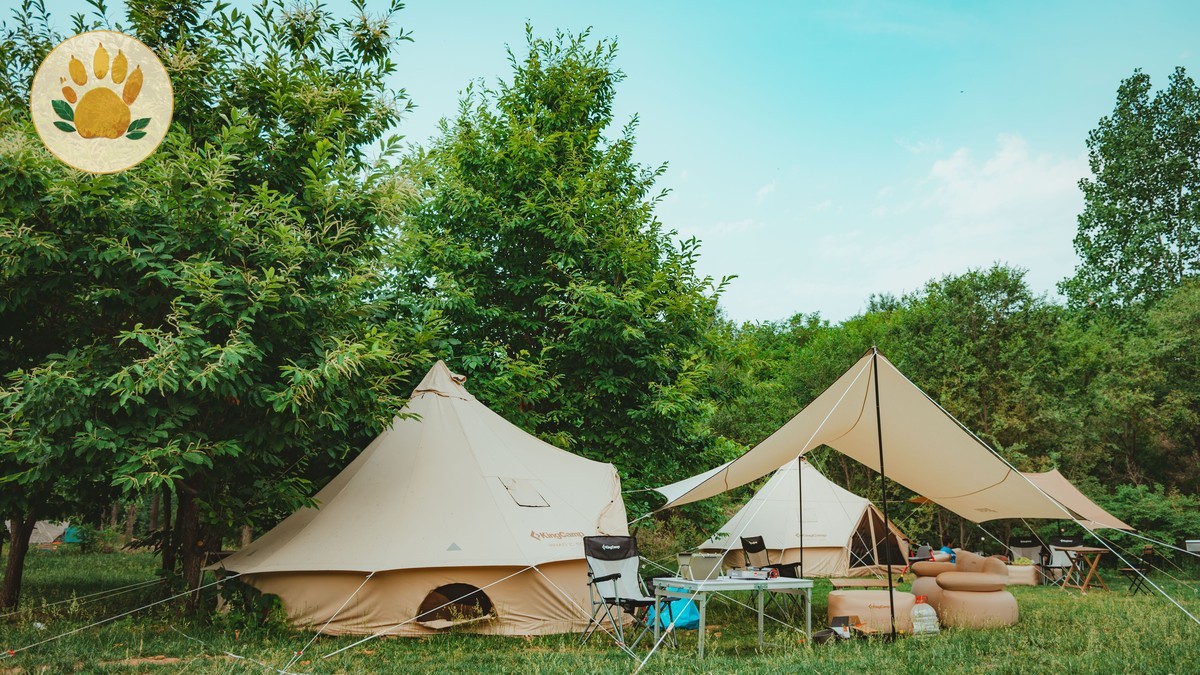
Some do, some do not. The budget tented and camping sector accepts M-Pesa far more often than large lodges. A camp with a Paybill or Till number usually advertises it on the invoice. A lodge that depends on card terminals may not want mobile money at all.
Mara Siria Camp, a real camp near Talek Gate on the Masai Mara, is a useful example. The camp sends an invoice with its Paybill number and the amount due. You pay the invoice through M-Pesa, enter your booking name as the reference, and show the confirmation message at check-in. That process works for final balances and some extras.
Around Lake Naivasha, camps such as Fisherman’s Camp and Camp Carnelly’s often accept M-Pesa at the office for campsite fees, meals, and boat trips. In Maasai areas, many small camps near Narok and Talek prefer M-Pesa because it reduces cash handling. Big city hotel style lodges inside the Mara may still push you toward a card.
The rule is simple. Ask the camp before you arrive. Do not assume a Paybill number exists because another camp up the road has one.
Paying Camp Deposits, Balances, and Incidental Charges
Different payments have different levels of M-Pesa acceptance.
A deposit for a group joining safari often goes by bank transfer or card link. Many operators will accept M-Pesa for small confirmation deposits, but international clients often find a card simpler. Ask when you book.
The final balance is where M-Pesa becomes useful for budget travelers. If you arrive in Nairobi and the camp says it accepts Paybill, you can pay your remaining balance in Kenyan shillings from your Safaricom line. This saves a card fee and avoids carrying large cash.
Incidental charges such as drinks, laundry, and extra meals are the most common M-Pesa payments. A camp bar may have a Till number. You pay the exact amount and the staff gets instant confirmation.
Tips are different. Guides, drivers, and camp staff often prefer Kenyan shilling cash. Some may have M-Pesa, but do not rely on that. Keep small notes for tips.
How to Pay by Paybill or Till Number
A Paybill number is for collecting money into a business account. You usually add an account number or reference, such as your booking name or invoice number. Camps use this for balances and deposits.
A Till number is for buying goods or services. You pay the exact amount shown and there is no account number. Camps use Till for the bar, shop, or laundry.
To pay, open the Safaricom menu and choose M-PESA, then Lipa na M-PESA. Choose Paybill or Buy Goods and Services. Enter the business number, the amount, and the reference if asked. Enter your PIN. Wait for the confirmation SMS. Save that message. It is your receipt.
M-Pesa for Park and Conservancy Fees
Kenya Wildlife Service now charges non-resident adults USD 90 per day at Amboseli and Lake Nakuru, USD 80 per day at Tsavo East and Tsavo West, and USD 80 per day at Nairobi National Park. Payments usually go through eCitizen or card at the gate. Do not plan to pay a KWS gate fee by M-Pesa unless your operator confirms it in writing.
Masai Mara National Reserve is a Narok County reserve, not a KWS park. Non-resident adults pay USD 100 per day from January to June and USD 200 per day from July to December. Some operators pay the county by mobile money, but the system changes. Ask your operator. Do not assume a personal M-Pesa payment covers your reserve fee.
Private conservancies such as Naboisho and Mara North usually bundle the fee into the lodge rate. The fee often ranges from USD 80 to USD 150 per person per night. You pay the camp, not a separate gate. Before booking, read what private conservancy fees cover and the Masai Mara private conservancy guide.
| Payment task | Real example | Cost or distance | M-Pesa reliability |
|---|---|---|---|
| Camp balance at a Mara camp | Mara Siria Camp, near Talek Gate | Indicative full board USD 90 to 160 per person per night | Reliable if the camp confirms its Paybill |
| Campsite fee at Lake Naivasha | Fisherman’s Camp or Camp Carnelly’s, 90 km from Nairobi | About 2 hours drive, indicative USD 15 to 25 per person per night | Usually accepted at the office |
| Amboseli National Park entry | Amboseli National Park, about 240 km from Nairobi | USD 90 non-resident adult per day | Not dependable at the gate |
| Masai Mara National Reserve entry | Sekenani Gate or Talek Gate, about 250 km from Nairobi | USD 100 low season, USD 200 high season | Ask your operator, do not assume |
| Camp extras and tips | Any camp, for example in Naboisho Conservancy | Indicative KES 500 to 1,000 per traveler per day in tip cash | Small M-Pesa payments often work, keep cash |
Mobile Coverage and Reliability in Remote Camps
Safaricom has the best coverage in Kenya, but remote safari camps sit in valleys, riversides, and thick bush. Signal can drop for hours. Mara Siria Camp near Talek usually has mobile signal because it is close to the gate area. Camps deeper inside Naboisho or Mara North may be off-grid.
Make large M-Pesa payments in Nairobi or Narok before you leave coverage. Do not wait until you are standing at the camp entrance with a weak signal. A failed payment can leave you waiting for the confirmation SMS while the camp holds your room.
For small extras, check the signal first. If the payment fails, wait for the reversal or ask the camp to use their WiFi to help you reconnect. Carry enough Kenyan shillings for one full day of extras.
M-Pesa Transaction Fees, Limits, and Exchange Considerations
M-Pesa charges a small fee per transaction. The fee rises with the amount you send. As an indicative range, sending KES 10,000 may cost roughly KES 50 to 120, but confirm the current rate in the M-Pesa menu before you send. Small bar and laundry payments may cost only a few shillings.
New tourist SIM lines can have daily transaction and balance limits. A non-resident who registers a line today should not assume they can send a large USD 2,000 safari balance in one go. Load funds in stages and test a small payment first.
Exchange matters. If you load M-Pesa with dollars at an agent, the rate can be worse than a bank or a card rate. For a big park fee or camp balance, a no-foreign-fee card may beat repeated M-Pesa loads and fees. For more detail, read our guide to using credit cards on a Kenya safari.
Safety Checks Before Sending a Payment
Verify the Paybill or Till number against the camp’s official invoice or website. Confirm the exact amount and the account reference. If someone sends you a different number by text, call the camp through the number on their website. Do not use the number inside the random message.
Never send a large deposit to a personal phone number unless the camp gave you that instruction in writing. Paybill is usually safer because the business name appears before you confirm. Take a screenshot of the confirmation SMS and keep it until after checkout.
If you send money to the wrong number, act immediately. Use the reverse transaction option in the M-Pesa menu if it appears, or report the error through Safaricom support with the confirmation details. The faster you act, the better the chance of a reversal.
Frequently Asked Questions
Can tourists use M-Pesa in Kenya? Yes. Buy a Safaricom SIM, register with a passport, and load cash through an agent.
Can I use M-Pesa at a safari camp without a Kenyan SIM? No. M-Pesa is tied to a Kenyan Safaricom number. A foreign SIM or eSIM cannot hold a wallet.
Do Masai Mara camps accept M-Pesa? Many small tented camps and campsites do, especially near Talek and Sekenani. Large lodges may not. Ask the specific camp.
Can I pay Mara Siria Camp by M-Pesa? Yes. The camp invoices its balance with a Paybill number and asks for your booking name as reference.
Can I use M-Pesa to pay Kenya park entry fees? Not reliably for KWS parks. Use eCitizen or a card. For the Masai Mara National Reserve, ask your operator how the county fee is paid.
Should I bring cash or a card if a camp does not accept M-Pesa? Both. Carry a Visa or Mastercard and a small reserve of Kenyan shillings for tips, local shops, and places with no signal.
The SafariPure Difference
We plan budget group joining safaris and camping routes, so we know which camps actually accept M-Pesa and which only say they do. Before you pay anything, we confirm the Paybill or Till number with the camp and put it in writing with the booking reference.
We are honest about park fees. Current KWS fees and Narok County reserve fees are included in our quotes where relevant. We do not hide small money surprises.
We prefer simple fixed routes with realistic drive times, like the 90 km Nairobi to Lake Naivasha run and the 5 to 6 hour road into the Masai Mara. That gives you time to sort your SIM, your M-Pesa balance, and your backup cash before you reach the wild.
Plan Your Safari Payments the Practical Way
Can you use M-Pesa at safari camps? Yes, for the right camps and the right payments. Just do not make it your only plan. Buy a Safaricom SIM, test a small payment, confirm the camp’s Paybill number, and carry a card plus Kenyan shilling cash.
Plan your budget group safari with SafariPure and we will confirm which camps accept M-Pesa before you book. Start on our contact page.